Hot spots: what causes them, and what to do in the first 24 hours
Our skin and allergy basics guide covers hot spots as one of several skin issues worth knowing — but they move fast enough, and look alarming enough, that the first few hours genuinely matter. This goes deeper on what actually causes one, why some dogs get them repeatedly, and what a real 24-hour window looks like.
The root cause is rarely 'just' the hot spot
A hot spot is what happens when persistent licking, chewing, or scratching breaks the skin and lets surface bacteria take over — but per Cornell's Riney Canine Health Center, that persistent licking almost always traces back to something else: flea or food allergies, an ear infection causing head shaking and scratching, an anal gland problem, matted fur trapping moisture against the skin, or prolonged wetness from swimming, bathing, or rain. Treating the hot spot itself without addressing whichever of these caused it is exactly why the same dog often gets another one in the same spot weeks later.
Why some dogs get them again and again
Breed and coat type genuinely change the odds. Thick-coated and double-coated breeds — Golden Retrievers, Labrador Retrievers, German Shepherds, Newfoundlands, Collies — trap heat and moisture close to the skin, creating exactly the warm, damp conditions bacteria need, especially in hot or humid weather. Cornell's veterinary dermatology guidance adds a less commonly known risk factor: dogs with drop (floppy) ears are particularly prone, since poor airflow around the ear canal makes ear infections — and the head-scratching they cause — more likely in the first place.
What actually happens in the first 24 hours
Veterinary dermatologist Dr. William Miller's widely-cited framework, via Cornell, has exactly two things to do yourself the moment you find one: stop the licking with an E-collar, and clip away the surrounding fur so the area can air out and actually be seen. Neither of those is 'waiting' — they're the immediate steps that keep it from getting worse while you arrange a vet visit, not a substitute for one. The 24-hour marker isn't permission to watch and see: it's the outside limit. A hot spot that's still there a full day later has moved past the point where anything short of professional treatment helps, and plenty of cases warrant going in same-day — a spot that's already large, oozing, foul-smelling, or clearly painful shouldn't wait for the 24-hour mark to be reached first.
Why 'just put something on it' is more complicated than it sounds
You'll find home-remedy suggestions (antiseptic washes, various creams) across general pet sites, and some veterinary sources do describe minor first-aid steps for a very small, very fresh, non-infected spot. But a hot spot that looks small on the surface is often already infected underneath matted fur — which is exactly why the two safe home steps above stop at containment (stopping the licking, clipping the fur) rather than extending into treating the wound itself. Cleaning, medicating, and diagnosing what's actually underneath needs a vet, full stop — getting there sooner rather than reaching for a product and hoping is consistently the better bet.
Prevention that actually addresses the pattern
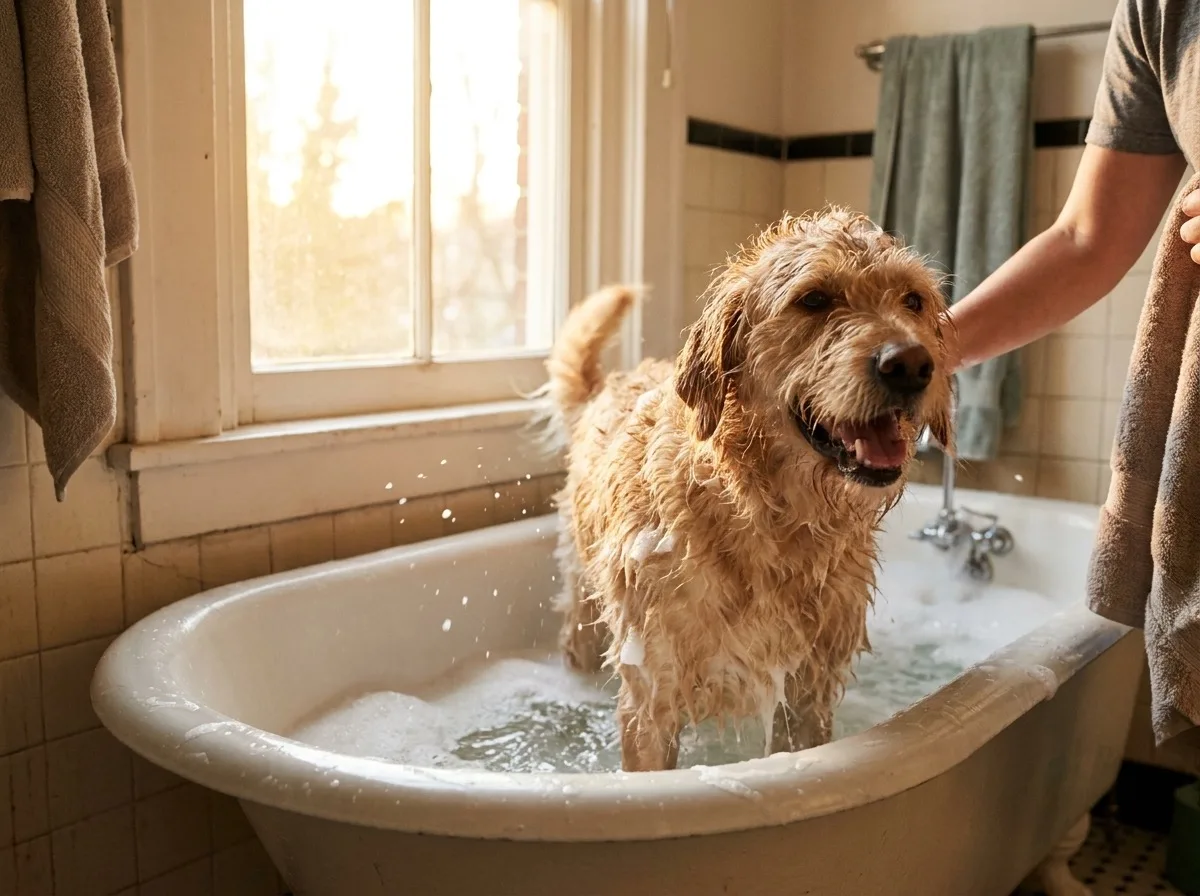
Since hot spots are a downstream symptom, real prevention means addressing the upstream cause: consistent year-round flea prevention (covered in our skin and allergy guide), drying thoroughly after swimming or baths rather than letting a double coat air-dry slowly, regular ear checks for drop-eared breeds specifically, and routine brushing or de-matting for thick-coated dogs so moisture can't get trapped against the skin in the first place.
Our skin and allergy basics guide covers the three allergy types that are often the actual root cause behind a recurring hot spot.
Get "Skin & allergy basics"
Educational content only. This article is for general educational purposes and isn't a substitute for professional veterinary, behavioral, or medical advice — always consult a licensed professional about your own pet's specific needs. Frolicy's articles are researched from publicly available sources and written with AI assistance; they are not written or reviewed by a licensed veterinarian or behaviorist. Frolicy and its owners aren't liable for outcomes from following this content. See our Terms of Use for full details.