Toolkit, guide, or e-book: what does your dog's anxiety actually need right now?
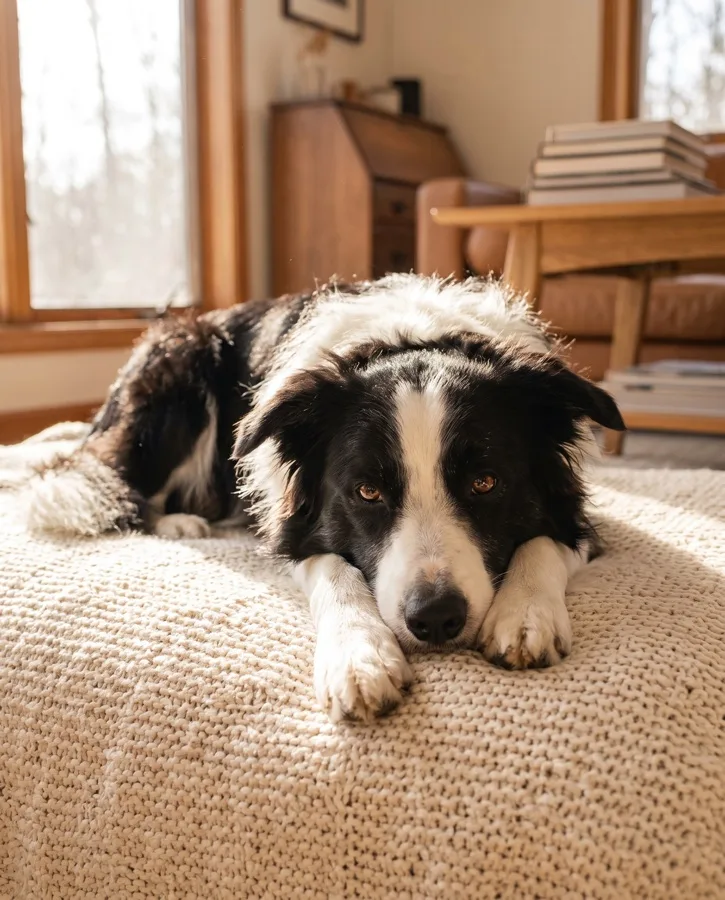
Anxious dog behavior isn't one problem with one fix — a dog panicking the moment you grab your keys needs something different than a new puppy who hasn't met the world yet. Frolicy has four real resources that cover different pieces of this: a calming toolkit, two free starter guides, and one paid e-book. Here's how to tell which one actually matches what's happening in your house.
Right now, in the moment: the Calm-Down Toolkit
If your dog is mid-meltdown — panting, pacing, hiding — the Calm-down toolkit isn't a long-term fix, and it doesn't try to be. It's five practical exercises for the moment things feel overwhelming: reading early stress signals before they escalate, a licking activity or pattern game to interrupt the spiral, and a pre-built calm-down space to retreat to. Use it today. It won't tell you why the anxiety keeps happening — that's what the next two resources are for.
If it's specifically separation anxiety: the free starter guide
If the pattern is specifically about being left alone — barking, destruction near doors, accidents despite being house-trained, all starting the moment you leave — that's separation anxiety, and it has an actual treatment plan, not just symptom management. The separation anxiety starter guide walks through a five-day desensitizing plan: short, boring, repeated absences that teach your dog leaving isn't a big deal, building duration slowly enough that panic never gets triggered in the first place. It's free, and for most dogs, it's the right next step after the toolkit.
If you have a new puppy: the socialization guide, or Start Calm
Puppies haven't developed separation anxiety yet — they're still forming their sense of what's normal and safe, in a window that closes around 16 weeks. The free puppy socialization window guide covers that window well: controlled exposure, reading stress signals, not overwhelming a puppy with too much at once. Start Calm goes further for the same age range — it's a paid, deeper guide through the full first sixteen weeks, covering socialization alongside sleep, crate and potty training, and building confidence, with a printable toolkit included. It's not a treatment for an existing anxiety problem; it's aimed at preventing one before it starts.
When any of this isn't enough
Both free guides land on the same point in their own way: if the pattern is getting worse, generalizing to more triggers, or your dog is injuring themselves trying to escape, that's a signal for a vet visit to rule out a medical cause, followed by a certified trainer or veterinary behaviorist. That's true no matter which resource you started with. And if the fear isn't really about being alone — storms, strangers, specific triggers — our Anxiety & Fear hub covers that broader picture.
Most dogs showing anxious behavior right now benefit from starting with the free five-day plan.
Get "The separation anxiety starter guide"The separation anxiety starter guide
Calm, step-by-step exercises to help your dog feel safe when you leave…
Calm-down toolkit
Five exercises for anxious moments, explained simply — for the days things feel…

The puppy socialization window guide
The short window that shapes the next 12 years — how to socialize a puppy well…
Educational content only. This article is for general educational purposes and isn't a substitute for professional veterinary, behavioral, or medical advice — always consult a licensed professional about your own pet's specific needs. Frolicy's articles are researched from publicly available sources and written with AI assistance; they are not written or reviewed by a licensed veterinarian or behaviorist. Frolicy and its owners aren't liable for outcomes from following this content. See our Terms of Use for full details.