Common guinea pig health problems and what to watch for
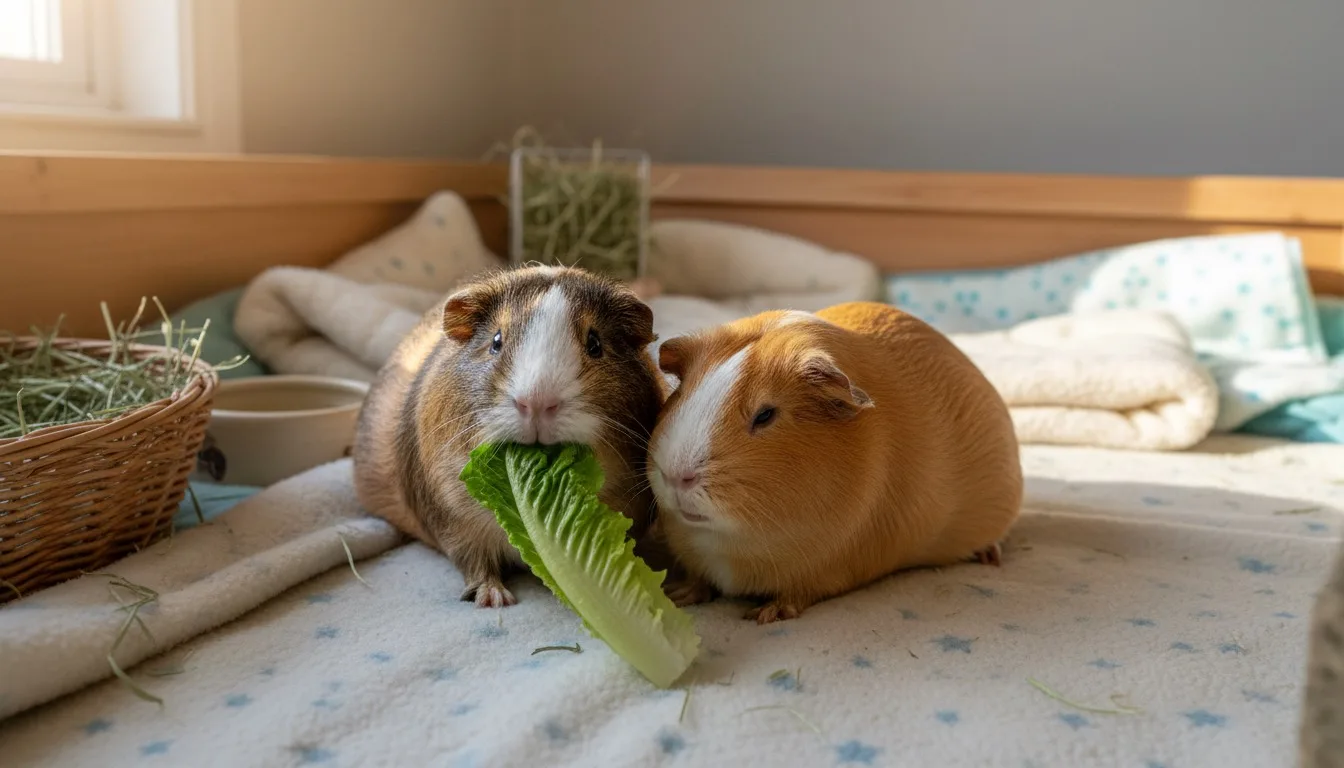
Most guinea pig health issues are preventable and treatable when caught early — the PDSA identifies five that come up again and again. Here's what to watch for, and why one of them (respiratory infection) genuinely can't wait.
Upper respiratory infection — the one that can't wait
Guinea pigs are obligate nasal breathers, meaning they can only breathe through their nose — a blocked nose from infection is a real emergency, not just discomfort. Watch for nasal or eye discharge, labored or wheezy breathing, sneezing and coughing, and loss of appetite. This is a same-day vet visit, not a wait-and-see.
Overgrown nails
Nails that curl inward can damage foot pads and lead to painful pressure sores. Regular trims, a healthy weight, and soft bedding (rather than wire-bottomed cages) prevent most cases before they start.
Bladder stones
Watch for blood in the urine, straining to urinate, or a tender abdomen. High-calcium vegetables like kale, spinach, and parsley are fine in small weekly amounts but worth limiting, and timothy or meadow hay (rather than alfalfa) is the better long-term choice for adult guinea pigs.
Eye injuries
Cloudy or red eyes, discharge, or visible scratches often trace back to hay poking the eye — positioning hay at a lower level in the cage and offering softer hay varieties reduces the risk.
Skin conditions
Bald patches, flaky red skin, excessive scratching, or visible specks can signal mites or another skin issue. Regular health checks during handling, a clean and dust-free enclosure, and isolating any new guinea pig before introducing them to your existing ones all help catch and prevent this early.
Our guinea pig care basics guide covers the daily habits — vitamin C, companionship, housing — that help prevent several of these in the first place.
Get "Guinea pig care basics"Educational content only. This article is for general educational purposes and isn't a substitute for professional veterinary, behavioral, or medical advice — always consult a licensed professional about your own pet's specific needs. Frolicy's articles are researched from publicly available sources and written with AI assistance; they are not written or reviewed by a licensed veterinarian or behaviorist. Frolicy and its owners aren't liable for outcomes from following this content. See our Terms of Use for full details.