Topic hub
Guinea Pig Care
The vitamin C, herd companionship, and space needs behind a growing rehoming crisis — and how to get it right from day one.
1 free guides
1 articles
The vitamin C, herd companionship, and space needs behind a growing rehoming crisis — and how to get it right from day one.
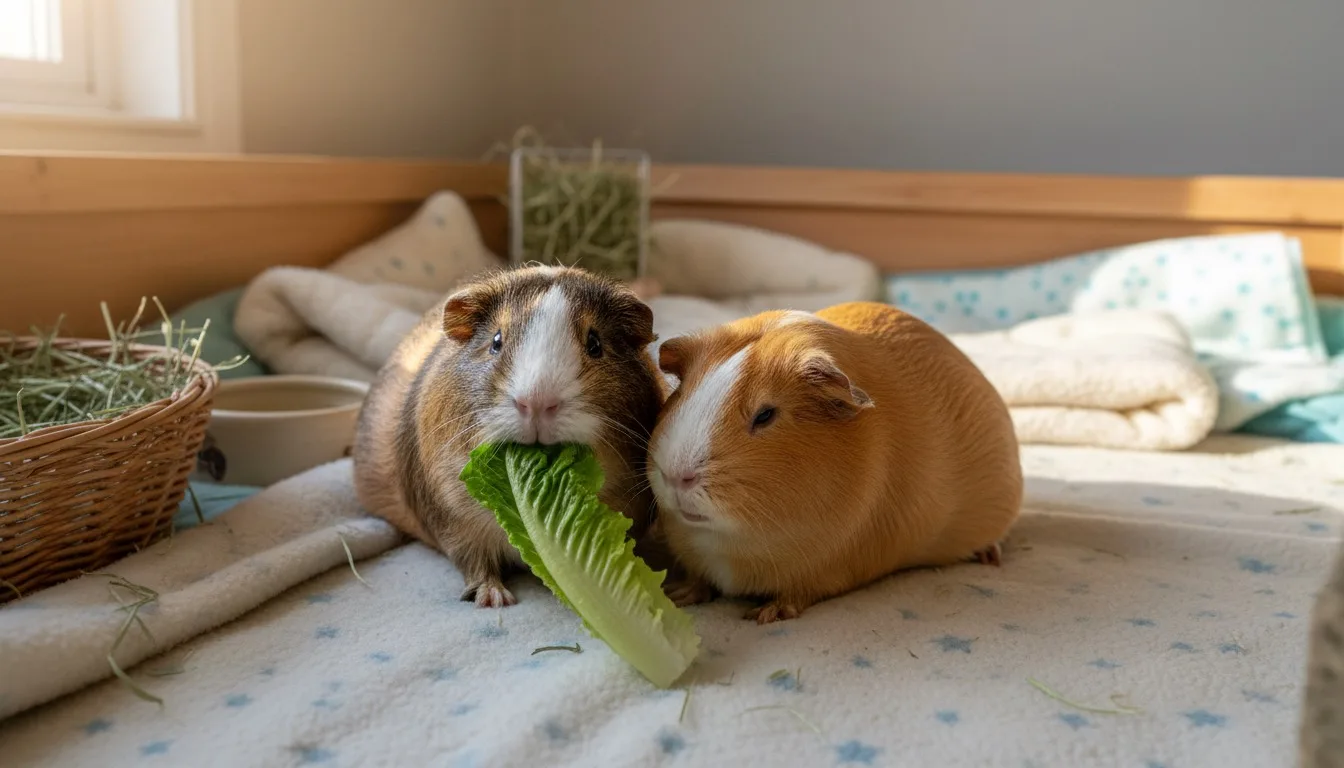
Guinea pigs are gentle, social, and genuinely rewarding pets — but the RSPCA reported a 40% jump in guinea pigs entering its care centers, driven partly by owners not knowing what they actually need day to day. Frolicy's second hub beyond dogs and cats covers what actually matters, grounded in RSPCA and PDSA guidance.
Guinea pigs are one of very few common pets that can't produce their own vitamin C, live in social groups of 8+ in the wild, and are currently facing a documented, worsening welfare gap — the RSPCA cites the cost of living, overbreeding, and public underestimation of their needs as the three overlapping causes. Real information before bringing one home addresses all three.
A beginner roadmap through this topic, in order
Guinea pigs can't produce or store their own vitamin C — daily veggies and a fortified guinea-pig-specific pellet are non-negotiable, not optional extras.
Guinea pigs live in groups of 8+ in the wild — no amount of human attention replaces guinea pig companionship.
The commonly cited minimum for a pair is around 6ft by 2ft of enclosed floor space, beyond most starter cages.
Unlimited hay first, measured vitamin-C-rich veggies daily, guinea-pig-specific pellets in moderation.
5-7 years of care, ongoing hay/veggie costs, and a genuine time commitment — knowing this upfront is the best prevention against the current rehoming trend.
Free, downloadable, judgment-free
Real answers to real questions
Only shown where a real product fit exists — nothing forced.
Where pet parents in this topic often go next
No — rabbit pellets aren't fortified with vitamin C the way guinea-pig-specific pellets are, and guinea pigs can't produce their own, so this substitution can lead to a real deficiency over time.
Yes, per the RSPCA — they're highly social animals that live in groups of 8 or more in the wild, and human attention doesn't replace that need. A same-sex pair or small group is the standard welfare recommendation.
The commonly cited minimum for the enclosed indoor area is around 6 feet by 2 feet, with enough height (roughly a foot) for their natural 'popcorning' hop — more than most off-the-shelf starter cages provide alone.
The RSPCA points to three overlapping causes: cost-of-living pressure, overbreeding creating more guinea pigs than informed homes, and a general public underestimate of their actual care needs.
Educational content only. This page is for general educational purposes and isn't a substitute for professional veterinary, behavioral, or medical advice — always consult a licensed professional about your own pet's specific needs. Frolicy's content is researched from publicly available sources and written with AI assistance; it is not written or reviewed by a licensed veterinarian or behaviorist. Frolicy and its owners aren't liable for outcomes from following this content. See our Terms of Use for full details.