Why is my dog suddenly scared of things they used to be fine with?
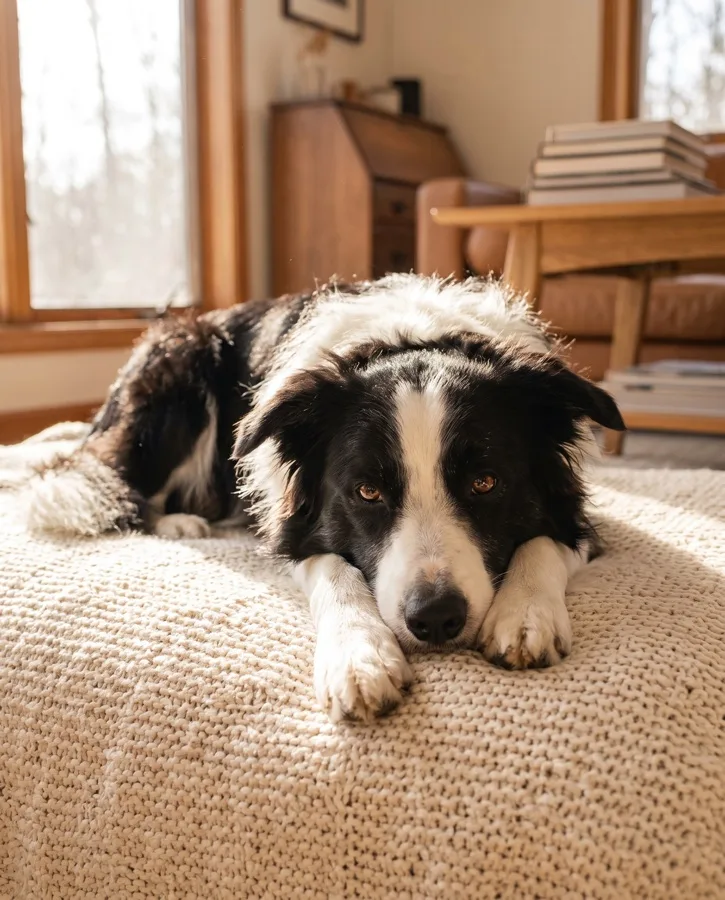
A dog who's suddenly afraid of the vacuum, a specific person, or a spot on a walk they've passed a hundred times can be confusing and worrying. Sudden fear responses usually have a real cause — even if it's not obvious to you.
"Fear periods" in young dogs
Puppies and young dogs go through developmental fear periods — typically around 8 to 11 weeks and again around 6 to 14 months — where things that never bothered them can suddenly seem threatening. This is a normal part of development, not a sign of a lasting temperament issue, as long as it's handled without forcing exposure.
A single bad association
Dogs can form a strong fear association from a single unpleasant event — a loud noise at a specific spot, an uncomfortable experience with a certain object. If you can identify a recent incident, avoiding forced repeat exposure and instead rebuilding a positive association slowly usually resolves it.
Pain as a hidden cause
New fear or avoidance — especially around being touched, jumping, or stairs — is worth ruling out as a pain response before assuming it's purely behavioral. Dogs are good at masking discomfort, and a sudden aversion is sometimes the first visible sign something physical is going on.
What not to do
Avoid forcing your dog toward the scary thing to "prove it's fine," and avoid heavy comfort or coddling that can inadvertently reinforce the fear response. The most effective approach is usually calm neutrality, paired with gradual, voluntary exposure at a distance where your dog stays relaxed.
Our calm-down toolkit has five practical exercises for the moment fear shows up.
Get "Calm-down toolkit"

Educational content only. This article is for general educational purposes and isn't a substitute for professional veterinary, behavioral, or medical advice — always consult a licensed professional about your own pet's specific needs. Frolicy's articles are researched from publicly available sources and written with AI assistance; they are not written or reviewed by a licensed veterinarian or behaviorist. Frolicy and its owners aren't liable for outcomes from following this content. See our Terms of Use for full details.