
Topic hub
Dog Behavior
The everyday dog questions — why they do what they do, and when it's worth a closer look.
0 free guides
8 articles
The everyday dog questions — why they do what they do, and when it's worth a closer look.
The everyday dog questions — why they follow you everywhere, how much exercise they actually need, why they're suddenly scared of something familiar. This hub gathers Frolicy's real-answer articles on common dog behavior questions.
Related: The Leash That Learns to Rest: A Calm, Complete Guide to Healing Your Dog's Leash Reactivity (e-book) →Most everyday dog behavior has a genuine, specific explanation — it's rarely "just personality" or unexplainable. Understanding the real reason behind a behavior (attachment, breed-driven exercise needs, a developmental fear period) usually points directly to whether it's worth addressing or simply normal.
A beginner roadmap through this topic, in order
Following, exercise needs, and mild caution around new things all have a wide normal range before they're worth concern.
A longstanding trait is usually just personality; a sudden shift is more informative and worth a closer look.
Boredom, insufficient exercise, or a training gap explain most common complaints before anything more complex does.
Leash pulling, for example, is almost always a training gap, not dominance — the fix targets the actual cause.
Free, downloadable, judgment-free
More guides coming soon.
Real answers to real questions

"Velcro dog" behavior is extremely common — here's when it's just personality and when it's worth a closer look.

The real answer depends on breed, age, and energy level — and getting it wrong in either direction causes problems.

Sudden fear responses usually have a real cause, from developmental fear periods to a hidden source of pain.
It's almost always a training gap, not a dominance issue — here's the stop-and-wait method that actually works.

The disease risk from a few careful outings is small — the behavioral risk from full isolation during the socialization window isn't.
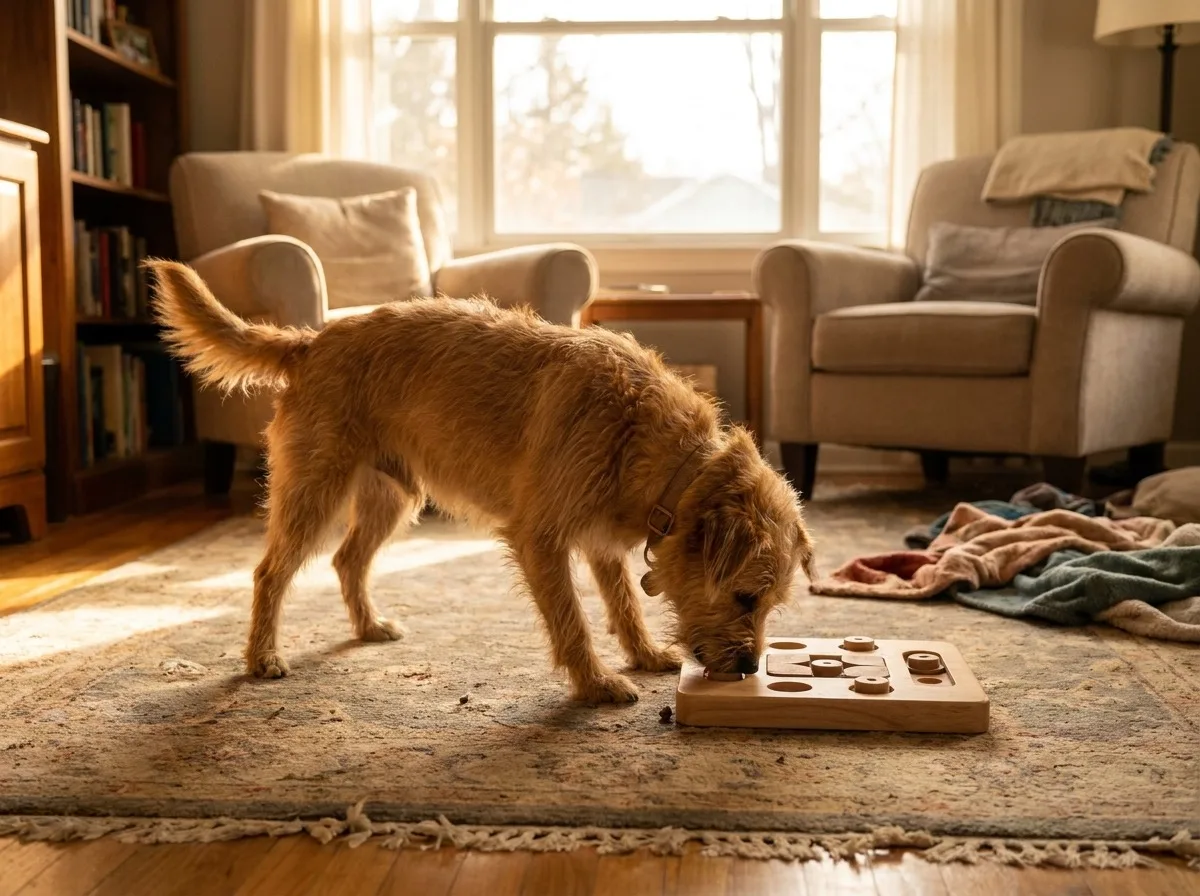
A bored dog's energy goes somewhere — these activities give it somewhere good to go on a rainy day.

Preparation before the change arrives matters more than the introduction moment itself.

Resource guarding, subtle intercat tension, and the signs a multi-pet home needs a change — before it becomes a real conflict.
Only shown where a real product fit exists — nothing forced.
Where pet parents in this topic often go next
For most dogs, this is simply secure attachment — you're their person, and it's rarely a problem on its own unless it's new, sudden, or paired with distress when you're out of sight.
It depends heavily on breed, age, and energy level — getting it wrong in either direction (too little or too much) causes its own problems.
Sudden fear responses usually have a real, specific cause — a developmental fear period, a bad experience, or even a hidden source of pain.
Educational content only. This page is for general educational purposes and isn't a substitute for professional veterinary, behavioral, or medical advice — always consult a licensed professional about your own pet's specific needs. Frolicy's content is researched from publicly available sources and written with AI assistance; it is not written or reviewed by a licensed veterinarian or behaviorist. Frolicy and its owners aren't liable for outcomes from following this content. See our Terms of Use for full details.