Topic hub
Hamster Care
The cage size a 2024 veterinary survey ranks as the top welfare issue for hamsters — and why most starter kits fall short of it.
1 free guides
0 articles
The cage size a 2024 veterinary survey ranks as the top welfare issue for hamsters — and why most starter kits fall short of it.
A 2024 survey of 46 European veterinary professionals identified small housing as the single most impactful welfare issue for hamsters — ahead of diet and handling. Frolicy's third hub beyond dogs and cats is grounded in that research plus RSPCA guidance, starting with the cage-size mistake most starter kits make.
Nearly 90% of households with hamsters have children, and 87% of those have children under 12 — meaning a lot of hamster care decisions are made under pressure at a pet store, often around a cage sized for convenience rather than welfare. Independent veterinary research and welfare-charity guidance converge on the exact same minimum cage size, which makes this one of the most clearly evidenced corrections Frolicy can make for a new pet category.
A beginner roadmap through this topic, in order
RSPCA, Blue Cross, PDSA, and a 2024 vet welfare survey all converge on the same minimum: at least 100cm x 50cm of floor space.
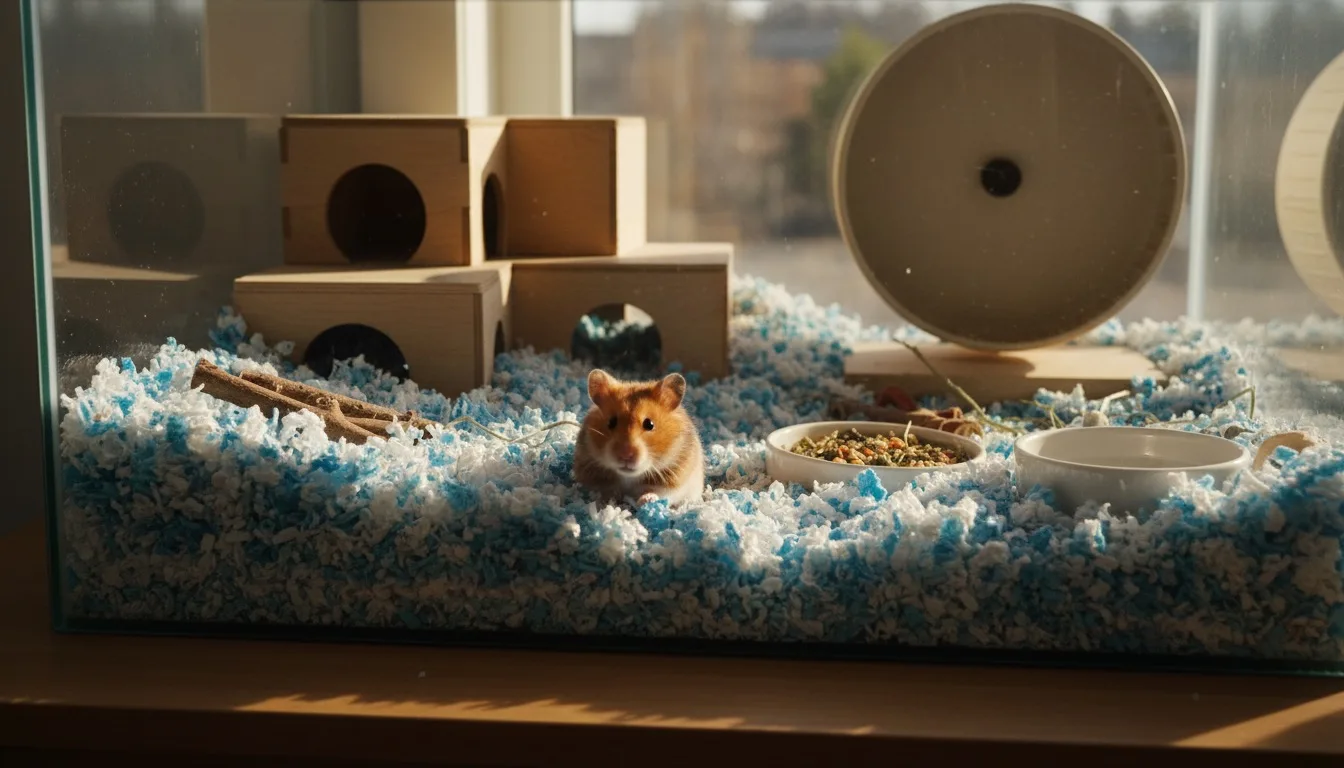
Fluffy 'cotton wool' bedding is a genuine amputation risk — paper-based or aspen bedding, provided deep enough to dig in, is the safe standard.
Most hamsters (especially Syrians) are solitary by nature — the opposite of rabbits and guinea pigs, who need company.
Hamsters are highly sensitive to ultrasound and do best with a consistent, predictable light schedule.
Cold exposure can trigger a dangerous hibernation-like torpor in hamsters — indoor housing isn't optional.
Free, downloadable, judgment-free
Real answers to real questions
More articles coming soon.
Only shown where a real product fit exists — nothing forced.
Where pet parents in this topic often go next
At least 100cm x 50cm of floor space, per RSPCA, Blue Cross, and PDSA guidance — independently confirmed as the top welfare-impact threshold by a 2024 survey of European veterinary professionals. Many pet-store starter cages fall short of this.
Usually not, and for Syrian hamsters specifically, no — they're solitary by nature and will fight if housed together. Some dwarf species can coexist in stable same-sex groups formed young, but even they don't require company to be happy.
No — fluffy, cotton-wool-style bedding is a genuine safety hazard, since thin strands can wrap around limbs and cause circulation loss or amputation. Paper-based or aspen bedding, at real depth, is the safe choice.
No — hamsters need to stay indoors. Cold temperatures can trigger a dangerous hibernation-like state called torpor, which isn't a safe condition for a pet hamster.
Educational content only. This page is for general educational purposes and isn't a substitute for professional veterinary, behavioral, or medical advice — always consult a licensed professional about your own pet's specific needs. Frolicy's content is researched from publicly available sources and written with AI assistance; it is not written or reviewed by a licensed veterinarian or behaviorist. Frolicy and its owners aren't liable for outcomes from following this content. See our Terms of Use for full details.